Posted on

Women in Translation Month: Enduring storytellers and fresh talent. #WITMonth

Norvik Press’s credentials in translating and publishing work by women writers remain impressive. In 2025, for example, we are publishing three titles by women writers, and four out of our five translators for those titles are women, too. 

Our latest blog looks at two of our regular favourites – a Swedish and a Norwegian author, each with a peerless storytelling pedigree – and introduces a modern-day writer from Greenland whose stories paint a startling picture of her country.

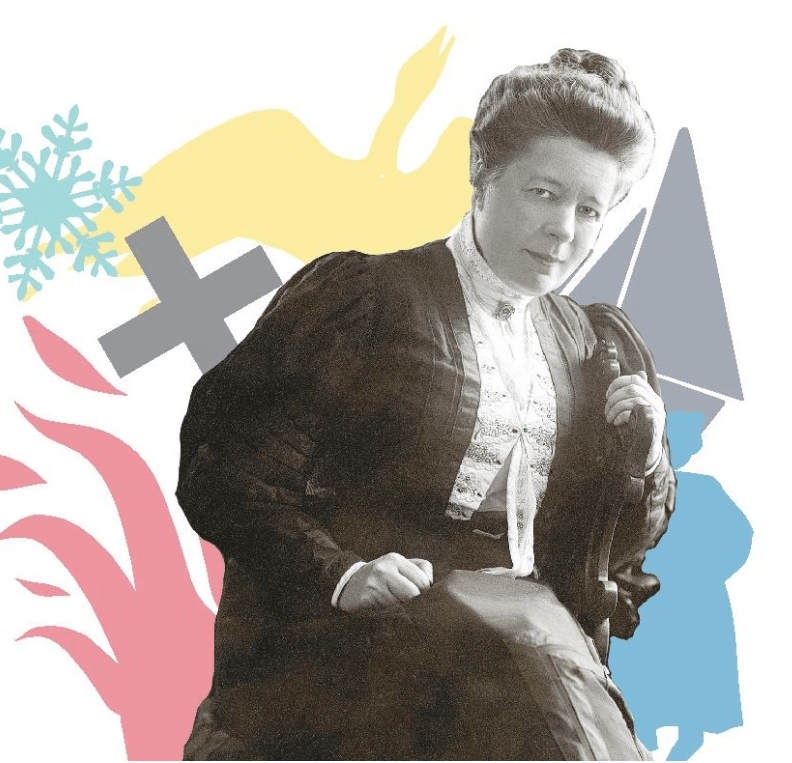
Selma Lagerlöf

Selma Lagerlöf’s youthful work Gösta Berlings saga was the jumping-off point for an extraordinary career. this largely home-schooled young trainee teacher decided to submit some chapters to a writing competition in Stockholm – and won! She then expanded those chapters into to a novel, which was published in 1891. It, and many of the novels that followed it, are whirlwinds of betrayal, love, human weakness and redemption.

Selma Lagerlöf (1858-1940)

The majority of the fast-moving romantic adventures are set around the shores of a lake in the dramatic north-westerly landscapes of Lagerlöf’s native province, Värmland. 

Värmland. Photograph: Martin Edström

The author’s early works completely confounded the literary establishment of the time, but like so much of Lagerlöf’s masterly storytelling they have remained enduringly popular not only within Sweden but around the world. The prime example is her much-loved adventure tale Nils Holgersson’s Wonderful Journey through Sweden, about a boy punished for laziness by an elf who shrinks his size. The boy is then carried the length and breadth of the land on the back of a goose, learning precious life lessons by becoming part of the flock. 

Norvik Press’s long-running ‘Lagerlöf in English’ series spans the full range of Lagerlöf’s work, from her action-packed Löwensköld Ring series to her multi-faceted trio of Mårbacka ‘memoirs’ via many standalone titles such as the touching and melancholy Emperor of Portugallia, and Banished, with its harrowing First World War scenes and ultimately uplifting pacifist message.

Steve Sem-Sandberg, winner of the Selma Lagerlöf Literature Prize 2024 awarded this month, spoke admiringly of her narrative instincts and her powers of imagination.  Lagerlöf, he said, possessed a unique ability to combine the time-bound and the timeless, to take things and people she had herself experienced and transform them. Norvik’s three translators – Sarah Death, Peter Graves and Linda Schenck – can only concur. They take delight in translating Selma’s work and are currently enjoyably engaged on their first team project, an anthology of her short stories. This newest addition to the ‘Lagerlöf in English’ series will be published next year under the title A Kaleidoscope of Stories.

Amalie Skram

Amalie Skram (1846-1905)

This adventurous nineteenth-century Norwegian writer is nowadays mostly known – and still widely read – for her novels about the unenviable fates of young women in a society which expects them to be modest and chaste, and brings them up to be obedient wives and devoted mothers. Norvik Press has previously published three of these, translated by the talented American translating team of Katherine Hanson and Judith Messick.

In Betrayed, the child-like Aurora embarks on marriage – and a long sea voyage – with her worldly-wise new husband as ship’s captain, only to discover with horror that he has had a number of sexual encounters; the discovery both repels and fascinates her, and drives her to torment him until both become victims of a repressive social system. Fru Inés tells the story of a woman married to a callous and profligate husband, who longs to experience the sexual ecstasy she has never known. The novel is set in Constantinople, a city the author knew well, and the sights, sounds and smells of the teeming metropolis blend with the growing anguish of Inés to reach a dreadful climax. The heroine of Lucie, on the other hand, is a girl from the other side of the tracks, a dancing girl and mistress of a respectable civil servant, Theodor Gerner; he decides to redeem her by marrying her, only to destroy her by his rigid expectations of acceptable behaviour.

Our new venture is a translation of the work which was originally considered Amalie Skram’s crowning achievement, the four-volume series The People of Hellemyr. The novels have often been compared to Zola’s Rougon-Macquart series; they are set in and around Skram’s native Bergen, and the narrow alleys and bustling harbour of the old port are central to the action.

Bergen harbour, late 19th century. Photograph: Bergen fotoarkiv

The first two volumes, in Janet Garton’s translation, will be published in 2025. Sjur Gabriel follows the struggle for existence of a desperately poor farming family, scraping a living from the stony soil, until the arrival of a golden child seems to offer a faint hope of a richer life. Two Friends follows the adventures of their grandson Sivert, who becomes a sailor and travels to Jamaica; he is a strong and willing lad who seems to have every chance of getting on in life, but he cannot flee from the fatal weakness of character which he has inherited.

Sörine Steenholdt

In a new departure for Norvik Press, we are excited to announce that we will also be publishing a Greenlandic book in 2025. Sørine Steenholdt was born in Paamiut in southern Greenland in 1986, and in 2015 her debut book, a short story and poetry collection called Zombiet Nunaat (Zombieland), was published.

Sörine Steenholdt (b. 1986). Photograph: Ulannaq Ingemann

All the texts can be seen as allegories that critique Greenlandic society. Some condemn the older generation of Greenlanders who fell into alcohol abuse and neglected their children, whilst others express the younger generation’s refusal to be represented as subservient to Denmark. While alcoholism has decreased, and sovereignty has been claimed, the memories of the suffering and betrayal of the older generation remain. Steenholdt’s stories emphasise the flaws of contemporary Greenland such as poor journalism, untrustworthy leadership, ineffective social institutions and a dysfunctional legal system, making her Greenland a ‘Zombieland’ – a place where no-one is in control.

Zombieland, cover of the original Greenlandic edition

The book was nominated for the Nordic Council Literature prize on first publication, and Norvik Press has been awarded a PEN translation grant for this translation. It will be translated from Danish by the well-known literary translator Charlotte Barslund.

Other Norvik Press translations of women writers:

Inga Ābele: The Year the River Froze Twice (translated by Christopher Moseley)

Victoria Benedictsson: Money (translated by Sarah Death)

Karin Boye: Crisis (translated by Amanda Doxtater) 

Fredrika Bremer: The Colonel’s Family (translated by Sarah Death)

Suzanne Brøgger: A Fighting Pig’s Too Tough to Eat (and Other Prose Texts) (translated by Marina Allemano) 

Camilla Collett: The District Governors Daughters (translated by Kirsten Seaver)

Kerstin Ekman: Witches’ Rings (translated by Linda Schenck), The Spring (translated by Linda Schenck), The Angel House (translated by Sarah Death), City of Light (translated by Linda Schenck), Childhood (translated by Rochelle Wright).

Janet Garton (ed.): Contemporary Norwegian Womens Writing

Svava Jakobsdóttir: Gunnlöth’s Tale (translated by Oliver Watts)

Viivi Luik: The Beauty of History (translated by Hildi Hawkins)

Hagar Olsson: Chitambo (translated by Sarah Death) 

Hanne Marie Svendsen: Under the Sun (translated by Marina Allemano)

Kirsten Thorup: The God of Chance (translated by Janet Garton)

Helene Uri: Honey Tongues (translated by Kari Dickson)

Elin Wägner: Penwoman (translated by Sarah Death)

Dorrit Willumsen: Bang: A Novel About the Danish Writer (translated by Marina Allemano)

To order the Norvik Press books highlighted in this blog, please follow the green hyperlinks or request the titles you would like at your favourite bookshop.
Posted on

Reading recommendations for International Women’s Day and Women’s History Month

Logo for International Women’s Day (IWD) 2023.

The month of March marks both International Women’s Day, on 8 March, and Women’s History Month. In honour of these occasions, this blog profiles our pioneering women writers. We are very proud to have played a part in facilitating access to their work for English-speaking readers – frequently through women translators, and with cover designs by women – and can think of nothing better than inviting them all to a literary dinner party!


Fredrika Bremer (1801–1865) would be the ideal dinner party guest, as she would be very well-placed to supervise all the cooking! We recently re-issued The Colonel’s Family, originally published in two parts (or should that be ‘courses?!’) in 1830–31 and translated by Sarah Death. The novel, which is narrated by a no-nonsense cook-housekeeper with a warm heart and an eye for human weaknesses, now comes to you with an utterly delicious new cover. Pudding, anyone?


Camilla Collett (1813–1895) is a pioneer in Norwegian literature. Translated by Kirsten Seaver, her novel The District Governor’s Daughters portrays a bourgeois society in which marriage is a woman’s only salvation, and follows sympathetically the struggles of one intelligent young woman to break out of this mould.


Amalie Skram (1846–1905) is not for the faint-hearted. Her oeuvre includes Betrayed, Fru Inés, and Lucie, as well as her correspondence: Skram had access to the leading figures of the time, from radical writers and critics to politicians, so there’s plenty to whet one’s appetite!


Victoria Benedictsson (1850–1888) would be an esteemed guest at the party. Her first novel, Money, was published in 1885. Set in rural southern Sweden where the author lived, it follows the fortunes of Selma Berg, a girl whose fate has much in common with that of Flaubert’s Madame Bovary and Ibsen’s Nora. The seating plan would need to allow for everyone wanting to converse with Benedictsson about the radical literary movement of the 1880s known as Scandinavia’s Modern Breakthrough.


Selma Lagerlöf (1858–1940): definitely a seat at the head of the table for her! Reading Lagerlöf is life-changing. A good place to start is with our Lagerlöf in English series. You can thank us later!


Elin Wägner (1892–1949): feminist, suffragist, pacifist and environmentalist, Wägner was the author of a prodigious amount of journalism, political pamphlets and prose fiction as well as an acclaimed biography of Selma Lagerlöf (see above!). The edited volume Re-Writing the Script: Gender and Community in Elin Wägner shows how Wägner’s texts outlined bold alternatives to the Swedish welfare state, and how her combined focus on gender and environmentalism anticipated much more recent ecocritical works. The title of her novel Penwoman, about the Swedish women’s suffrage movement, speaks for itself and applies to all the other guests at this soirée.


Hagar Olsson (1893–1978) and Karin Boye (1900–1941) would absolutely be seated together, and we would recommend reading them together, too: Chitambo and Crisis are the perfect modernist pairing.


Kerstin Ekman (b. 1933) provides a literary smörgåsbord to choose from. She is the author of Childhood, and of our recently reissued Women and the City tetralogy. Begin with Witches’ Rings: the central character is a woman so anonymous that her name is not even mentioned on her gravestone. You can read excerpts from Ekman’s other work published in translation by our friends over at Swedish Book Review.


Dorrit Willumsen (b. 1940), author of the novel Bangcame to visit us here at Norvik Press for a chat with her translator, Marina Allemano, about their shared fascination in the (endlessly fascinating!) life of Herman Bang. Bang is welcome to join the party too: he will make a most excellent speaker in the after-dinner slot.


Kirsten Thorup (b. 1942) is unafraid to tackle meaty topics in her work. In The God of Chance, translated by Janet Garton, she unflinchingly explores the problematic relationship between sponsor or donor and recipient. Scenes move from colourful depictions of life in a luxury hotel in Africa, cheek by jowl with desperate poverty, to elite designer flats in Copenhagen, and finally the bustling multicultural community on the streets of London.


Suzanne Brøgger (b. 1944) surely takes the prize for best title with her prose collection, A Fighting Pig’s Too Tough to Eat. Brøgger’s writings transgress genre and have often prompted comparison with her fellow countrywoman, Karen Blixen. This collection traces her development from social rebel to iconoclast and visionary.


Vigdis Hjorth (b. 1959) is an eminent guest. A House in Norway tells the story of Alma, a divorced textile artist who makes a living from weaving standards for trade unions and marching bands. When a Polish family moves into her apartment, their activities challenge her unconscious assumptions and her self-image as a “good feminist”. Is it possible to reconcile the desire to be tolerant and altruistic with the imperative need for creative and personal space?

Happy Women’s History Month and International Women’s Day!

Posted on 1 Comment

The Lagerlöf in English series – updates

In June 2011, Norvik Press published Lord Arne’s Silver, The Phantom Carriage and The Löwensköld Ring, three short novels by the world-renowned author Selma Lagerlöf. It was the start of an exciting and, for us, very gratifying project – the Lagerlöf in English Series – which has turned into twelve books so far. The translations are done by Linda Schenck, Peter Graves and Sarah Death, all experienced and prize-winning translators from Swedish to English. In addition to the substantial job of translating a Nobel Prize winner, Schenck, Graves and Death have also contributed with their own translators’ afterwords in their respective translations. These chapters make for an intriguing read about different aspects of translating each particular book and give in-depth information about Lagerlöf’s work. Furthermore, each book is introduced by an exciting and informative preface written by the late Helena Forsås-Scott, the pioneering mind behind the series.

The series now comprises 13 titles, most recently Memoirs of a Child (volume II of the Mårbacka trilogy), published in 2022.

You can read more about all of the titles in our Series brochure.

Posted on

A summer of Lagerlöf

Ahead of the Anglo-Swedish Society’s event celebrating Selma Lagerlöf – A Wonderful Adventure and Women in Translation Month (#WITMonth) in August, we are highlighting our library of Lagerlöf in English.

Anna Svärd is Lagerlöf’s last work of fiction and the final volume in her Löwensköld Trilogy. First published in Swedish in 1928 and translated for Norvik Press by Linda Schenck, it completes the family cycle of the preceding two volumes, The Löwensköld Ring and Charlotte Löwensköld, and combines a compelling account of women’s struggle towards agency with a chilling – and unexpected – denouement.

They laughed loud and long, each one louder than the
next, though at the same time they were embarrassed. It was,
of course, not proper to laugh when the head of the family
and household had been duped. They were decent, well-bred
women and they definitely disapproved of themselves. But
their laughter quite simply came from natural human depths,
and could not be restrained without risk of suffocation.

We have made an extract from Anna Svärd newly available here. This scene is a joy for all: it recounts a practical joke which is particularly fitting for #WITMonth, and may raise a smile in these challenging times. It will also be particularly useful pre-reading for those planning to join the Anglo-Swedish Society’s readings of Lagerlöf’s work later this summer, for which you can order copies of all the texts in our Lagerlöf in English series from your friendly local bookshop.

Posted on

Ten Lagerlöf masterpieces for £100

Women in Translation Month is almost over, but we couldn’t let it pass without celebrating the woman whose shadow looms large over our catalogue, and the women and men who have translated her work: Selma Lagerlöf.

For a limited time only, we’re offering ten Lagerlöf masterpieces for £100. Read on for more details…

Print

To date, Norvik Press has published ten of Lagerlöf’s works in English translation [click here to download the series leaflet]:

A Manor House Tale: a psychological novella and a folk tale in which two young and damaged people redeem each other.

Banished: infused with the visceral horrors of the First World War, Banished is a tale of love, loneliness, and the extremes of human morality. Read an extract here.

The Emperor of Portugallia: A compelling exploration of father-daughter relationships and of madness.

The Phantom Carriage: an atmospheric ghost story and a cautionary tale of the effects of tuberculosis and alcoholism, famously adapted to film by the great Swedish director Victor Sjöström.

Lord Arne’s Silver: from a 16th-century killing unfolds a tale of retribution, love and betrayal.

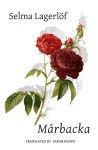
Mårbacka: part memoir, part mischievous satire set on Lagerlöf’s childhood estate. Read an extract from Mårbacka in English here.

The Löwensköld Trilogy: Lagerlöf’s last work of fiction, the trilogy follows several generations of a cursed family and explores destiny, evil, motherhood, and many other themes along the way. The trilogy consists of three volumes:  The Löwensköld Ring, Charlotte Löwensköld, and Anna Svärd.

The internationally beloved tale of a boy and his goose, Nils Holgersson’s Wonderful Journey through Sweden, Volume 1 and Volume 2 (Nils Holgersson is also available in a single-volume hardback collector’s edition).

Purchased individually, all eleven paperbacks (including the two paperback volumes of Nils Holgersson) cost a total of £135 (plus P&P). Until 14 September 2018, we are offering a limited number of complete sets of eleven paperbacks at the discounted price of £100 (plus P&P). This special price is only available on orders placed directly with Norvik Press, not through book stores or online. Please email norvik.press@ucl.ac.uk to place your order. First come, first served – available only while stocks last!

Print

Posted on

The Lagerlöf in English series

In June 2011, Norvik Press published Lord Arne’s Silver, The Phantom Carriage and The Löwensköld Ring, three short novels by the world-renowned author Selma Lagerlöf. It was the start of an exciting and, for us, very gratifying project – the Lagerlöf in English Series – which has turned into twelve books so far. The translations are done by Linda Schenck, Peter Graves and Sarah Death, all experienced and prize-winning translators from Swedish to English. In addition to the substantial job of translating a Nobel Prize winner, Schenck, Graves and Death have also contributed with their own translators’ afterwords in their respective translations. These chapters make for an intriguing read about different aspects of translating each particular book and give in-depth information about Lagerlöf’s work. Furthermore, each book is introduced by an exciting and informative preface written by the late Helena Forsås-Scott, the pioneering mind behind the series.

The series now comprises 12 titles, most recently Memoirs of a Child (volume II of the Mårbacka trilogy), published in 2022.

You can download the Series brochure, or read more about the Series below.

Banished

What happens to an individual who is rejected by society? What happens to a society that eventually realises the living are more important than the dead, and that it is suffering a crisis of values and priorities? What does war do to us and to our outlook on the world? Selma Lagerlöf struggled with these issues throughout World War I and experienced a mental block in writing about them. Then she found an opening and produced a thought-provoking tale of love, death and survival that grapples with moral dilemmas as relevant today as they were a century ago.

The Emperor of Portugallia

For poverty-stricken farm labourer Jan, the birth of his daughter Klara gives life a new meaning; his devotion to her develops into an obsession that excludes all else. We are taken from the miracle of a new-born child and a father’s love for his baby girl into a fantasy world emerging as a result of extreme external pressures, in which Jan creates for himself the role of Emperor of Portugallia. Yet this seemingly mad world generates surprising insights and support. Described as ‘perhaps the most private of Selma Lagerlöf’s books’, the novel takes us deep into a father-daughter relationship that carries the seeds of tragedy within it almost from the start.

Mårbacka

The property of Mårbacka in Värmland was where Selma Lagerlöf grew up, immersed in a tradition of storytelling. Financial difficulties led to the loss of the house, but Lagerlöf was later able to buy it back, rebuild it and make it the centre of her world. The book Mårbacka, the first part of a trilogy written in 1922–32, can be read as many different things: memoir, fictionalised autobiography, even part of Lagerlöf’s myth-making about her own successful career as an author. It is part social and family history, part mischievous satire in the guise of innocent, first-person child narration, part declaration of filial love.

The Löwensköld Ring

The Löwensköld Ring is the first volume of a trilogy originally published between 1925 and 1928. In addition to being a disturbing saga of revenge from beyond the grave, it is a tale of courageous, persistent women, with interesting narrative twists and a permeating sense of ambiguity. The potent ring of the title brings suffering and violent death in its wake and its spell continues from one generation to the next, as well as into the two subsequent novels in the trilogy. The Löwensköld trilogy was Lagerlöf’s last work of pure fiction, and is now considered a masterpiece.

Charlotte Löwensköld

A curse rests on the Löwensköld family, as narrated in The Löwensköld Ring. Charlotte Löwensköld is the tale of the following generations, a story of psychological insight and social commentary, and of the complexities of a mother-son relationship. Charlotte is in love with Karl-Arthur – both have some Löwensköld blood. Their young love is ill-fated; each goes on to marry another. How we make our life ‘choices’ and what evil forces can be at play around us is beautifully and ironically depicted by Selma Lagerlöf, who was in her sixties when she wrote this tour de force with the lightest imaginable touch.

Anna Svärd

The curse on the Löwensköld family comes to fruition in unexpected ways in this final volume of the Löwensköld cycle. Anna Svärd is also very much a novel of women’s struggle toward finding fulfilment. The Löwensköld Ring resonates with ‘beggars cannot be choosers’ in relation to what a poor woman can expect in life, while Charlotte Löwensköld moves toward women having some choices. In Anna Svärd the eponymous protagonist takes full and impressive control of her own life and destiny. The question of motherhood and the fates of the children with whom the characters engage is another theme. The reader goes on to follow Charlotte, Karl-Artur, Thea and their families, familiar from the previous volume, through this compact novel as it moves relentlessly toward a chilling dénouement.

A Manor House Tale

Written in 1899, Selma Lagerlöf’s novella A Manor House Tale is at one and the same time a complex psychological novel and a folk tale, a love story and a Gothic melodrama. It crosses genre boundaries and locates itself in a borderland between reality and fantasy, madness and sanity, darkness and light, possession and loss, life and death. Lagerlöf’s two young characters, Gunnar and Ingrid, the one driven to madness by the horrific death of his goats in a blizzard, the other falling into a death-like trance as a result of the absence of familial warmth, rescue each other from their psychological underworlds and return to an everyday world that is now enhanced by the victory of goodness and love.

Nils Holgersson’s Wonderful Journey through Sweden: The Complete Volume

Starting life as a commissioned school reader designed to present the geography of Sweden to nine-year-olds, this absorbing tale quickly won the international fame and popularity it still enjoys over a century later. The story of the naughty boy who climbs on the gander’s back and is then carried the length of the country, learning both geography and good behaviour as he goes, has captivated adults and children alike, as well as inspiring film-makers and illustrators. The elegance of the present translation – the first full translation into English – is beautifully complemented by the illustrations specially created for the volume.

The Phantom Carriage

Written in 1912, Selma Lagerlöf’s The Phantom Carriage is a powerful combination of ghost story and social realism, partly played out among the slums and partly in the transitional sphere between life and death. The vengeful and alcoholic David Holm is led to atonement and salvation by the love of a dying Salvation Army slum sister under the guidance of the driver of the death-cart that gathers in the souls of the dying poor. Inspired by Charles Dickens’ A Christmas Carol, The Phantom Carriage remained one of Lagerlöf’s own favourites, and Victor Sjöström’s 1920 film version of the story is one of the greatest achievements of the Swedish silent cinema.

Lord Arne’s Silver

An economical and haunting tale, published in book form in 1904 and set in the sixteenth century on the snowbound west coast of Sweden, Lord Arne’s Silver is a classic from the pen of an author consummately skilled in the deployment of narrative power and ambivalence. A story of robbery and murder, retribution, love and betrayal plays out against the backdrop of the stalwart fishing community of the archipelago. Young Elsalill, sole survivor of the mass killing in the home of rich cleric Lord Arne, becomes a pawn in dangerous games both earthly and supernatural. As the deep-frozen sea stops the murderers escaping, sacrifice and atonement are the price that has to be paid.

Posted on

Norvik Press Launch and 30 Year Celebration Report

norvik_logo_400x400It was an enthusiastic and well versed audience that assembled to celebrate the launch of Norvik Press’ two new publications, the latest additions to the “Lagerlöf in English” series; Anna Svärd and Mårbacka. The translators, Linda Schenck and Sarah Death, were in attendance, joined by Janet Garton, director and co-founder of Norvik Press.
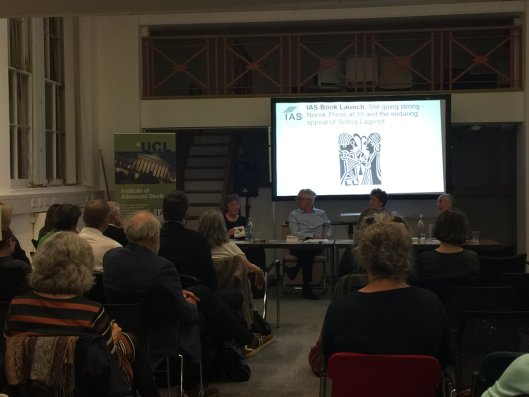
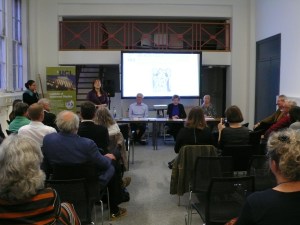
The panel was chaired by Professor John Mullan, the Acting Dean of the Faculty of Arts and Humanities, UCL, who was most entertaining in making the panel very accessible for those less familiar with the work of Norvik Press and of Selma Lagerlöf. The book launch also served as a celebration of Norvik Press’ 30th anniversary, its first book having been published back in 1986.

the-launch-panel
The Panel: Janet Garton, John Mullan, Sarah Death, Linda Schenck


9781909408289The panel presented to us Anna Svärd, the final volume of Lagerlöf’s Löwensköld Ring trilogy and originally published in 1928, translated by Linda Schenck, who explained the enduring appeal of Lagerlöf’s works. She described Anna Svärd, and Lagerlöf’s works in general, as being “mischievious” and at the same time “very serious”, and pointed out that Selma Lagerlöf’s continuing appeal is evident as we are witnessing somewhat of a “Lagerlöf renaissance”. There was discussion about the need for a re-translation of Lagerlöf’s works, to continue to bring these novels into the English speaking world, even if the funding for such a project could be hard to come by.

9781909408296Mårbacka, translated by Sarah Death and originally published in 1922, is the first of another of Lagerlöf’s trilogies, and is a work of “autofiction”, as the translator herself put it; a fictionalised account of Selma Lagerlöf’s childhood in her family home, told through the innocent eyes of a young Selma herself.

These new publications are two additions to a large collection of translated books published by Norvik Press, set up to raise awareness for the “overlooked classics”, as Janet Garton described them, of Scandinavian literature, whether contemporary or not. The panel joked about how Norvik Press had not been immune to the Nordic Noir trend, having recently published the crime fiction title Walpurgis Tide  by Faroese writer Jógvan Isaksen.

Janet Garton also mentioned how the publishing house was now made up of an all-female team, which is somewhat refreshing and perhaps accounts for the prevalence of female writers in the list of Norvik Press’ publications. Overall, there was a feeling that Norvik Press was still succeeding in what it set out to do, and these new publications show that, even at 30, Norvik Press is indeed still going strong.

Alice Fletcher

p1060049

p1060048

p1060040p1060045p1060044p1060046


Posted on

Anna Svärd by Selma Lagerlöf

Anna Svärd, the latest addition to Norvik Press’s “Lagerlöf in English” series, is the third and final volume of what is known as the Löwensköld Ring trilogy. The characters from Charlotte Löwensköld, the second book in the trilogy, reappear in this novel, and the curse that has rested upon the Löwenskölds relating to the eponymous ring comes to fulfillment. Anna Svärd focuses on what makes a relationship, and what creates or destroys a family.

As if by design, but in fact entirely by coincidence, the Västanå Theatre group, which performs in Värmland every summer, often but not always putting on bright, musical renditions of Lagerlöf works, will be performing The Löwensköld Ring (Löwensköldska ringen) this summer, beginning on midsummer day and continuing into the autumn.

The story of the Löwensköld family, its secrets and its complications, is both a fine portrait of late nineteenth-century life in Värmland and astonishingly topical in its insights into human behavior, not least gender roles. These were late Lagerlöf works, in fact the last strictly fictional books she wrote, and they reflect a mature and perceptive writer.

For anyone traveling around Sweden this summer, even a non-Swedish speaker, reading the books (or even just the first volume, which I understand will be the focus of the play) in English would surely make it entirely possible to enjoy the performance which, although in Swedish, will be so full of song and dance and excitement that the language might seem almost irrelevant.

Mårbacka
Image by: I. Leojth, Selma Lagerlöfs Mårbacka at Sunne in Värmland, Sweden

This slideshow, although not from this summer’s performance which hasn’t yet opened, gives a good idea of what Västanå’s plays are like. They are performed in a wonderful old barn called Berättarladan, or “Storyteller’s Barn”, beautifully situated just next to the lovely Rottneros Park, well worth a visit, and not far from Selma Lagerlöf’s home Mårbacka, where visitors to the house and grounds can anticipate Norvik’s soon-to-be published translation, by Sarah Death, of Lagerlöf’s somewhat fictionalized memoir of the same name:

Wishing all readers and visitors to Sweden a full and satisfying summer.

Linda Schenck, translator

Anna Svärd by Selma Lagerlöf and translated from Swedish by Linda Schenck.
Now available at all good bookstores.

The Ring Trilogy by Selma Lagerlöf
The Löwensköld Ring
Charlotte Löwensköld
Anna Svärd